What do you do when your home is listed for say, $500,000 and you get an offer for $350,000? Here are my 3 suggestions:
Don’t get offended
Counter back full price
Move on with life
Often, low ballers are a waste of time. And this is why you shouldn’t waste an ounce of energy in getting offended by such offers.
But from time to time, they are legitimately testing waters, or your level of motivation. So my advice is to return the favor and test their motivation to buy by countering full price and wait for their reaction, if any.
Again, since chances are that they are wasting time, after you counter, move on with life and focus on the goal. Selling your home to the right buyer at the right price.
Questions about your home value? Call / text (305) 305 1535 or email me!
The answer is that there is no right answer. There is no “normal” amount or “customary” figure. It all narrows down to your level of motivation to acquire the property. Tipically, stronger contracts tend to offer more deposit, and vice versa. Some other factors to consider when determining an amount:
The other party’s motivation (whom you are negotiating)
Are you competing against other offers?
How long the property’s been on the market?
How strong (or weak) are the other terms in your contract?
Questions about your home value? Call / text (305) 305 1535 or email me!
9 times out of 10, people check their home value on Zillow or Trulia prior to calling a real estate agent. I personally think these sites are great considering they get it right about 50% of the time (when you take into account that an algorithm is trying to determine a very complex ordeal such as the value of a home…props to that).
So why do they miss the mark the other 50% of the time?
I don’t really know, and I doubt anyone else truly knows, but here is my guess. Because they can only see what’s on the outside of the property thru the eye in the sky – aka satellites – and they can only analyze what can be found on public records such as number of beds, number of baths, etc.
The problem here is two-fold.
Often, public records are incorrect
These sites can’t see the interior of your home
Say you added a family room to a property. Or your home was built in 1975, but you have made an update here and there. It’s this lack of accurate information that can distort what’s reported in sites like Zillow.
Questions about your home value? Call / text (305) 305 1535 or email me!
Rotary Golf Classic 2016 was held at the Biltmore Hotel during the month of February. Proceeds raised benefit Miami resident high school students transitioning into college. This event is hosted annually and attracts about 200 golf players that get to enjoy breakfast, an 18 hole game, and an auction-luncheon. We give because I also benefited from these type of funds in order to get my degree in Finance. And I encourage you, in one way or another, to get involved!
FYI: data analyzed in this blog post is for single family homes only.
How’s the market?
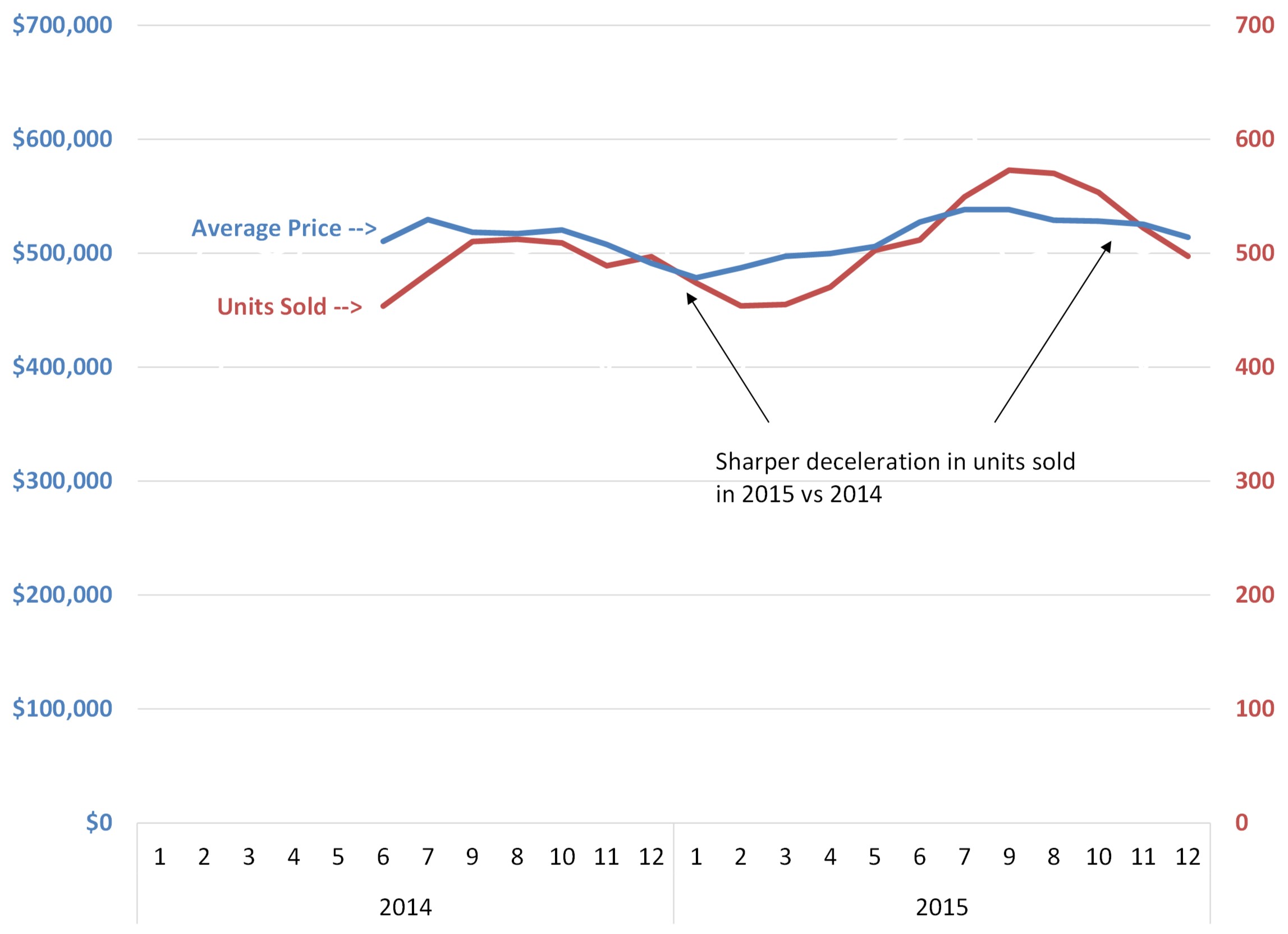
Prices remain unchanged and sales volume (number of homes sold) is slower than usual. Although this trend is expected as we are just heading out of the holiday season – when most homeowners keep their property off the market – there is a stronger deceleration in units sold at the turn of 2015-2016 when compared to the turn in 2014-2015 (see below graph).
*Above graph represents combined data from Coconut Grove, Coral Gables, Cutler Bay, Kendall, Palmetto Bay, Pinecrest, South Miami, Sweetwater, The Roads, West Miami, and Westchester*
What’s the outlook?
In my opinion, home prices will continue to remain unchanged for the remainder of 2016. Around March or April, volume of sales will take an upturn just like it did in March and April of 2015, but it will not be as significant. This will have no impact in home prices due to economically healthier home owners that are able to hold on to their homes till prices go up.
In my opinion, it will not make a difference weather you sell now or at any time during the year since prices are expected to remain status quo. However, should your home-carrying expenses (mortgage payments, taxes, insurance, etc) exceed any appreciation in price in your neighborhood, then it may be a good time to sell.
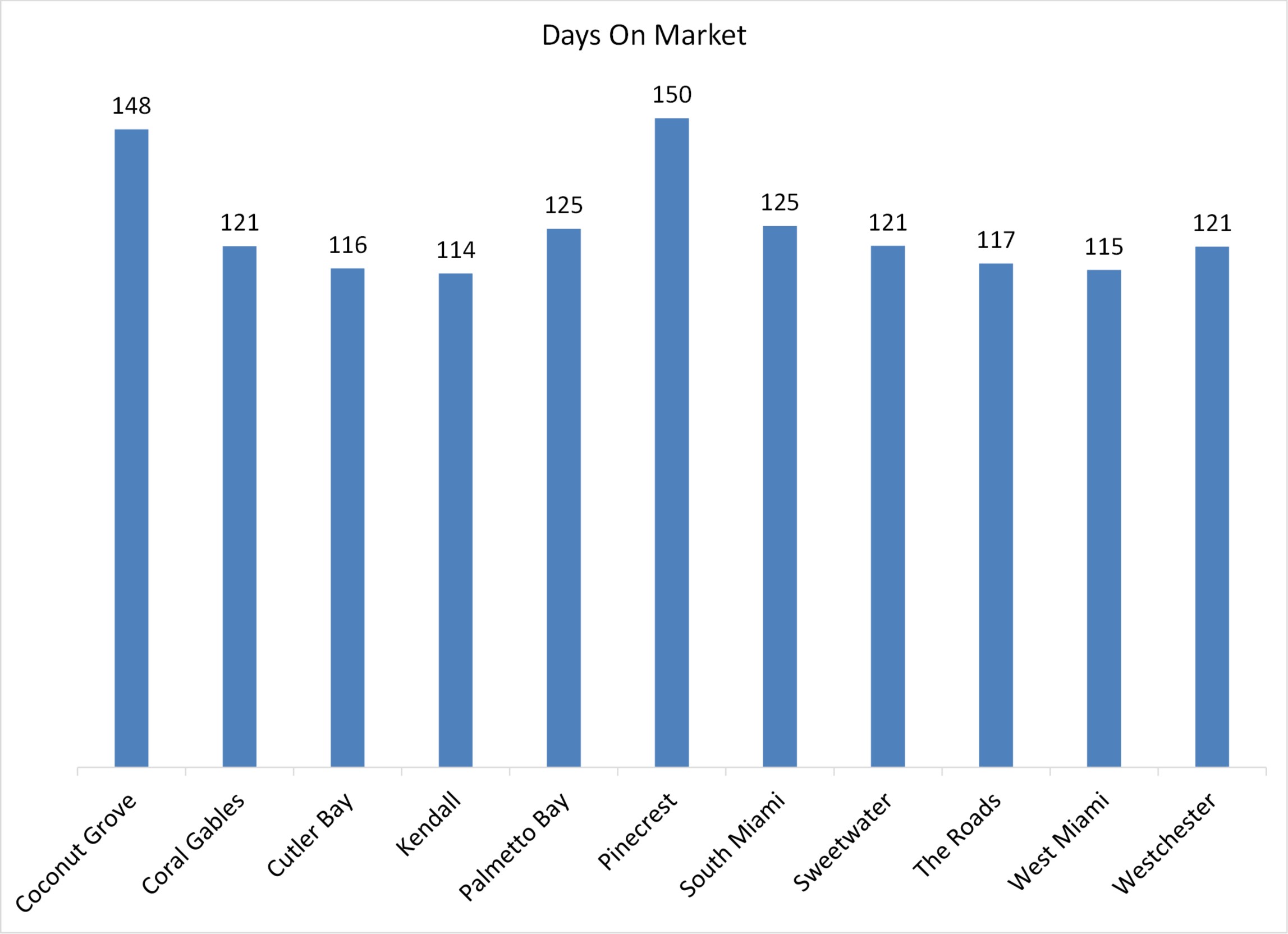
On average, 122 days or 4 months. See below graph for the average number of days it will take your home to sell in your neighborhood.
How’s the foreclosure market doing?
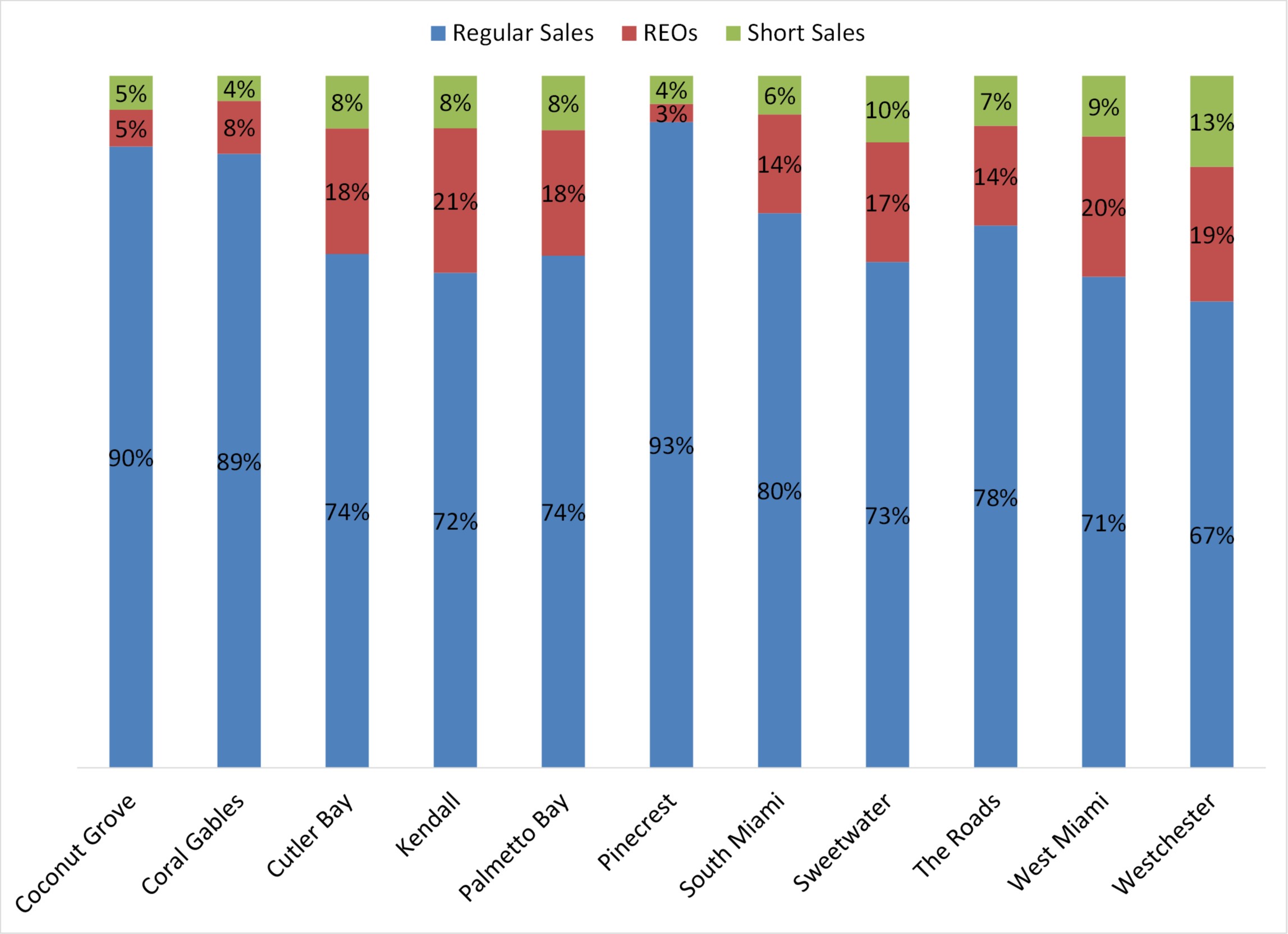
Not good. And this is good news considering such market makes up less than 20% of sold homes. See below graph to see how the foreclosure market is doing in your neighborhood.











 Mario Avalos